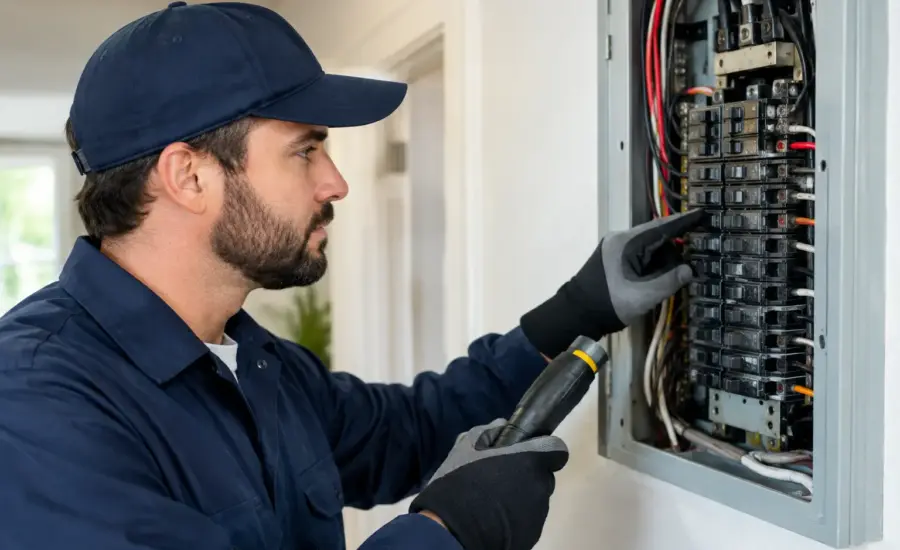
A breaker that trips once after a heavy storm may be an inconvenience. A breaker that keeps tripping, a warm outlet, or a light that flickers when the refrigerator starts is different. Knowing when to call an electrician can protect your property, prevent costly damage, and reduce the risk of shock or fire.
For homeowners, property managers, and business owners, the practical rule is simple: reset or replace only what you can safely identify as a minor issue. If the problem repeats, involves heat, moisture, burning smells, exposed wiring, or a service panel, bring in a qualified local electrician.
10 signs it is time to call an electrician
1. Your circuit breaker trips repeatedly
A breaker is designed to shut off power when a circuit is overloaded or a fault is detected. Resetting it once can be reasonable if you know several high-demand appliances were running on the same circuit. But if it trips again with normal use, do not keep resetting it.
Repeated trips can point to overloaded wiring, a damaged appliance, a short circuit, or an electrical fault inside the wall. An electrician can test the circuit and determine whether the fix is as simple as redistributing electrical load or as involved as repairing wiring.
2. An outlet, switch, or panel feels warm
Electrical fixtures should not become noticeably hot during ordinary use. A slightly warm phone charger can be normal, but a warm outlet cover, switch plate, plug, extension cord, or breaker panel needs attention.
Turn off power to the affected circuit if you can do so safely, unplug devices from the outlet, and avoid using it. Heat can signal a loose connection, failing component, or overloaded circuit. Those conditions can worsen behind walls where they are not visible.
3. You smell burning or see discoloration
A sharp burning smell, melted plastic odor, scorch marks, or brown discoloration around an outlet is an urgent warning. Do not cover the smell with air freshener or assume it came from a device unless you are certain.
Disconnect power if it is safe to do so and call an electrician promptly. If there is smoke, sparking, or an active fire risk, leave the area and call emergency services. Electrical fires can spread inside walls before flames become visible.
4. Lights flicker, dim, or surge without a clear reason
One flickering bulb may simply be loose or nearing the end of its life. Flickering throughout a room, lights that dim when equipment starts, or bulbs that brighten unexpectedly are more concerning.
These symptoms may come from a loose connection, an overloaded circuit, voltage fluctuations, or an issue with the electrical service entering the building. In a commercial space, they can also disrupt computers, point-of-sale equipment, refrigeration, and other essential systems. An electrician can trace the source instead of treating the symptom.
5. Outlets spark, buzz, or stop working
A tiny spark when plugging in a device can occasionally occur, especially with equipment that draws power immediately. Repeated sparks, loud popping, buzzing, or crackling are not normal. Neither is an outlet that works only when a plug is held at a certain angle.
Stop using that outlet. Loose contacts and damaged receptacles can create arcing, which generates heat and can damage the wiring connection. This is a repair for a licensed professional, not a reason to keep testing the outlet with different devices.
6. You get shocks or tingling from appliances
Even a mild tingling sensation from a refrigerator, washing machine, tool, computer, faucet, or light switch deserves a professional assessment. The source could be a faulty appliance, improper grounding, damaged wiring, or moisture affecting an electrical connection.
Do not assume a small shock is harmless because it did not cause an injury. The next contact could be more serious, particularly in bathrooms, kitchens, basements, garages, and outdoor areas where water raises the risk.
7. Water has reached electrical equipment
Flooding, a roof leak, a burst pipe, or a wet basement can affect outlets, wiring, junction boxes, appliances, and the electrical panel. Water and electricity are a dangerous combination, even after the visible water is gone.
Do not touch electrical equipment while standing in water or on a wet surface. If power can be shut off safely from a dry location, do so. An electrician should inspect affected components before they are returned to service. Drying the room alone does not confirm that wiring or devices are safe.
8. Your home or building has outdated wiring
Older properties can operate safely, but age changes the conversation. Two-prong outlets, frequent reliance on extension cords, a fuse box, aluminum branch wiring, cloth-covered wiring, or an undersized panel may indicate that the electrical system no longer matches current demand.
This does not automatically mean a full rewire is needed. The right approach depends on the building’s condition, planned use, local code requirements, and the capacity of the existing service. An electrician can inspect the system and prioritize upgrades, such as adding grounded outlets, dedicated appliance circuits, GFCI protection, or panel capacity.
9. You are planning a remodel or adding major equipment
Electrical work should be part of the planning stage for a kitchen remodel, finished basement, home office, addition, commercial build-out, or major landscaping project. The same applies when adding an EV charger, hot tub, HVAC equipment, workshop tools, or high-demand kitchen appliances.
These projects often require new circuits, load calculations, permits, and inspections. Waiting until walls are closed or equipment has arrived can create delays and unnecessary expense. Calling an electrician early helps ensure the system can safely support the upgrade.
10. You need to alter wiring, the panel, or outdoor power
Replacing a lightbulb or resetting a tripped breaker is one thing. Moving an outlet, installing a new circuit, replacing a service panel, connecting hardwired equipment, or working near overhead lines is another.
DIY electrical work can appear straightforward until an incorrect connection creates a hidden hazard. Requirements also vary by municipality and project type. A qualified electrician can perform the work to applicable code, obtain permits when needed, and help protect the value and insurability of the property.
What you can safely check first
Before scheduling service, you can take a few basic steps without opening a panel or removing outlet covers. Check whether the issue affects one device or multiple devices, unplug nonessential equipment from the circuit, and see whether a GFCI outlet has tripped. GFCI outlets are common in kitchens, bathrooms, garages, basements, laundry areas, and outdoor locations, and a reset button may restore power.
Also note what was happening when the issue started. Did the breaker trip when the microwave and air fryer ran together? Did lights begin flickering after a storm? Did an outlet stop working after a plumbing leak? Clear details help an electrician diagnose the problem faster.
Avoid using extension cords as a permanent solution, swapping breakers for larger ones, or repeatedly resetting a breaker that trips. Those actions can bypass the warning instead of correcting its cause.
When the situation is an emergency
Call emergency services first if you see flames, heavy smoke, active sparking, a downed power line, or someone has received a serious electrical shock. Stay away from downed lines and anything touching them, including fences, vehicles, puddles, and tree branches. Contact the utility company as directed by local emergency responders.
For urgent but non-emergency concerns, such as a burning odor, hot panel, or recurring arcing, shut off power only if you can reach the panel safely and know which circuit to turn off. Then contact an electrician for prompt service.
How to choose the right local electrician
Start with providers who serve your specific area and clearly list the kind of work they handle. Residential troubleshooting, commercial tenant improvements, panel upgrades, generator connections, and emergency repairs can require different experience. Ask whether the electrician is licensed and insured where required, whether permits will be handled when applicable, and whether the estimate explains labor, materials, and any service-call charge.
For property managers and business owners, it also helps to ask about scheduling, documentation, and whether the provider can coordinate work around tenants, customers, or operating hours. A detailed scope protects both sides from surprises.
Bizbook Directory can help you find nearby electrical providers by service category and location, so you can compare local options without sorting through irrelevant results.
Electrical problems rarely become more convenient with time. If something feels hot, smells wrong, behaves unpredictably, or no longer supports the way you use the space, treat that signal seriously and get the right local professional involved.