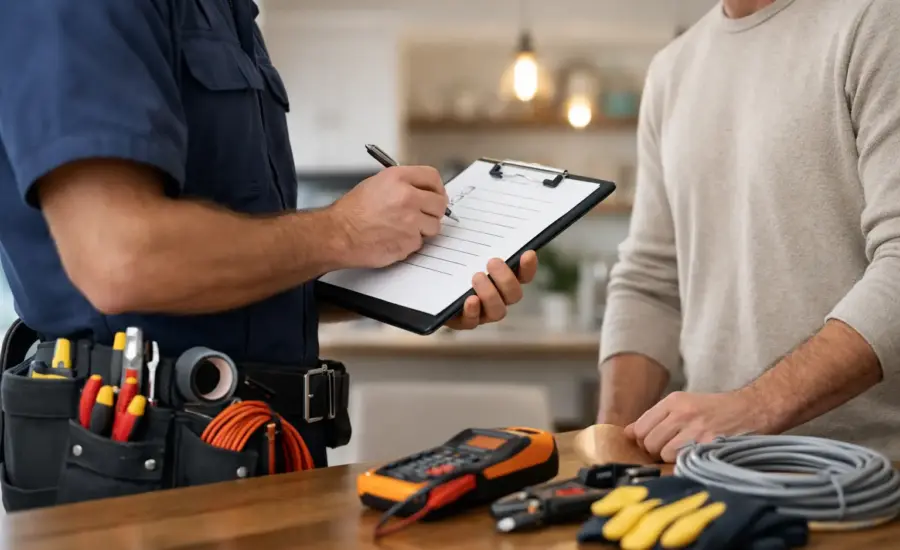
A flickering light can be a small repair. A warm outlet, recurring breaker trip, or burning smell can be a safety issue that should not wait. This electrician hiring checklist for homeowners helps you sort through local options with the right questions, so you can hire based on qualifications and clear communication instead of whoever answers first.
Electrical work is one of the home services where the lowest quote is not always the best value. A dependable electrician protects your home, follows local requirements, explains the work plainly, and leaves you with a repair or installation you can rely on.
Start With the Job, Not the Search
Before contacting electricians, write down what is happening, where it is happening, and when you first noticed it. Include photos of the panel, outlet, fixture, or affected area when it is safe to do so. This gives providers enough detail to tell you whether the issue may need an emergency visit, an on-site diagnosis, or a straightforward service call.
Be specific about your goal. Replacing a light fixture, adding an EV charger, upgrading an aging panel, rewiring part of a remodel, and troubleshooting intermittent power are very different jobs. Some electricians focus on service calls, while others are better set up for larger residential projects. For a property manager, it also helps to state whether access must be coordinated with a tenant and whether the work needs to fit a maintenance approval process.
If you smell burning, see smoke, notice sparks, or have an outlet or panel that feels hot, turn off power to the affected circuit if you can do it safely and contact a qualified electrician promptly. Do not keep resetting a breaker that trips repeatedly just to restore power.
Electrician Hiring Checklist for Homeowners
Use this checklist while comparing nearby electrical contractors. You do not need a perfect answer to every question, but vague answers around licensing, insurance, permits, or pricing are a reason to slow down.
- Confirm licensing for your location. Ask whether the electrician and business hold the license required for residential electrical work in your state or municipality. License requirements vary, and larger jobs may require a licensed electrical contractor rather than a handyman.
- Verify insurance coverage. A professional should carry liability insurance and, where applicable, workers’ compensation coverage. This matters if someone is injured on your property or accidental damage occurs during the work.
- Ask about relevant experience. An electrician who routinely installs service panels may not be the best fit for a complicated smart-home troubleshooting issue, and vice versa. Ask how often they perform work similar to yours.
- Find out who will do the work. Some companies send a master electrician, while others send an apprentice or journeyman under supervision. There is nothing inherently wrong with a team approach, but you should know who is arriving and who is responsible for the finished job.
- Discuss permits and inspections. Ask whether your project needs a permit, who will pull it, and whether an inspection is included in the scope. Panel upgrades, new circuits, and remodel wiring often have different requirements than minor repairs.
- Get the estimate in writing. The estimate should identify labor, materials, diagnostic fees, permit costs when applicable, and any conditions that could change the price. For troubleshooting work, a provider may only be able to quote the service-call fee until the cause is found.
- Ask about warranties. Clarify what is covered if the same problem returns. Labor warranties and manufacturer warranties are different, so ask how each one applies.
- Check local reputation and responsiveness. Read recent feedback with an eye for patterns, including punctuality, cleanup, communication, and how the company handles follow-up. A local directory can make it easier to narrow the search to businesses that actually serve your area.
Compare Estimates the Right Way
For a planned project, try to collect two or three estimates. The goal is not to turn the process into a race to the bottom. It is to see whether each provider is proposing the same scope of work.
One quote may include a permit, a new dedicated circuit, patching access holes, and a higher-quality device or fixture. Another may only cover the visible installation. Both numbers can look reasonable until you compare what is included. Ask each electrician to explain differences in materials, panel capacity, circuit requirements, and expected labor time.
For a small repair, multiple in-person quotes may not make sense once service-call charges are considered. Instead, ask for the diagnostic fee, the hourly rate after diagnosis, and whether there is a minimum charge. A clear answer is more useful than a suspiciously precise total before anyone has inspected the problem.
Be cautious if a contractor demands full payment before work begins, refuses to provide documentation, pressures you to decide immediately, or suggests skipping required permits to save money. Deposit practices vary by project size and local rules, but a reasonable payment schedule should match real milestones, such as material ordering, rough-in work, inspection, and completion.
Ask Questions That Prevent Surprises
A good electrician should be able to explain the job without burying you in technical language. You are not expected to know electrical code. You are expected to understand what will happen in your home, what it will cost, and what decisions you need to make.
Ask whether the power will need to be shut off and for how long. If the work involves your main panel, a shutdown can affect refrigeration, internet equipment, medical devices, garage access, and home security systems. Plan around it before the crew arrives.
For visible work, ask where wiring will run and whether drywall, siding, or trim may need to be opened. If another trade will handle repairs afterward, confirm that in advance. Electricians commonly make safe access openings, but finish carpentry and painting may not be part of their quote.
For upgrades, ask whether the existing electrical service can support the new load. This is especially relevant for EV chargers, hot tubs, electric ranges, heat pumps, workshops, and home additions. Adding equipment without checking capacity can create an expensive change order later.
Prepare Your Home for the Visit
Once you choose a provider, make the appointment easy to complete. Clear access to the electrical panel, outlets, attic entry, crawlspace, and work areas. Move fragile items away from the work zone and secure pets. If the electrician needs to enter a tenant-occupied unit, give residents clear notice of the arrival window and any expected power interruption.
Keep copies of the estimate, permit information, invoices, and warranty details. For major work, take a few before-and-after photos for your own records. If you sell the home later, documentation for a panel upgrade, added circuits, or permitted remodel wiring can be useful.
At the end of the job, ask the electrician to show you what was completed and explain any new labels, breakers, outlets, or equipment. Test the items you can safely test, such as switches, lights, GFCI outlets, or charging equipment. If something is unclear, ask before the crew leaves rather than trying to diagnose it later.
Choose Local Fit Along With Technical Skill
The best electrician for your home is qualified, insured, transparent, and available for the type of work you need. Local fit matters too. A provider familiar with your area is more likely to understand common housing styles, local permitting processes, and realistic scheduling conditions.
When searching by service category and location, Bizbook Directory can help homeowners move past broad, outdated results and focus on nearby electrical businesses. Then use the same checklist for every candidate. A well-chosen electrician is not just there to fix one outlet or install one circuit – they can become a reliable local contact when your home needs safe, informed electrical work again.