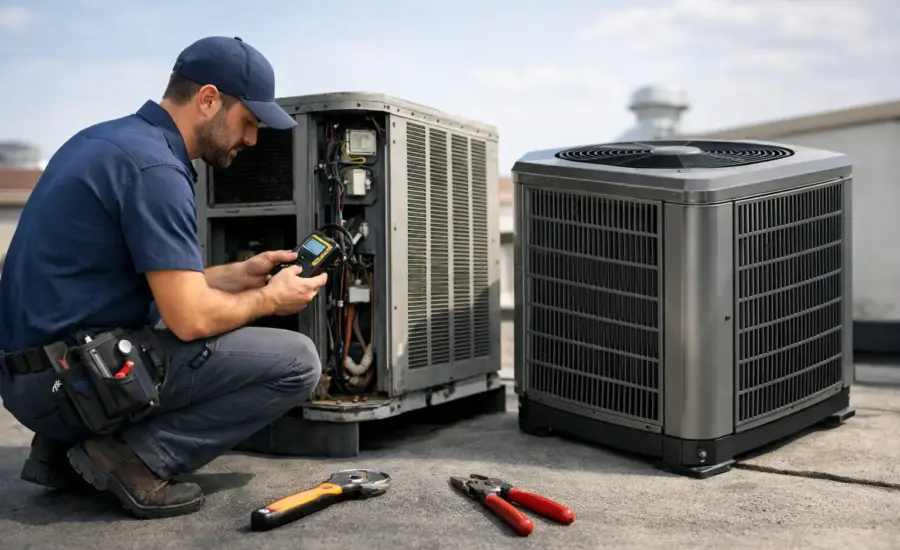
A failed air conditioner during a heat wave or a furnace that quits on a cold night creates the same urgent question: should you fix it or replace it? HVAC repair vs replacement is rarely a simple price comparison. The lowest bill today may not be the most economical choice over the next few years, especially when comfort, energy use, and repeat breakdowns are part of the picture.
A dependable local HVAC contractor can inspect the system, explain what failed, and give you a clear estimate for both paths. Before you authorize work, use the factors below to understand what a practical recommendation should consider.
Start With the Age of Your HVAC System
Age is one of the fastest ways to put a repair estimate in context. Central air conditioners and heat pumps commonly last about 10 to 15 years, while a well-maintained furnace may run for 15 to 20 years. Those are general ranges, not deadlines. A system that receives regular maintenance and operates in a moderate climate may last longer. One that runs hard, has poor airflow, or was installed incorrectly may wear out sooner.
If your equipment is in the first half of its expected service life and the problem is isolated, repair usually makes sense. A failed capacitor, contactor, thermostat, igniter, or blower component can often be repaired without suggesting the entire system is near the end.
Once an air conditioner or heat pump is around 10 years old, a larger repair deserves a closer look. An older furnace with a major heat exchanger concern also calls for a broader conversation. You are not only paying for the current repair. You are deciding whether to put more money into equipment that may need another significant service call soon.
Compare the Repair Cost to the System’s Value
A common rule of thumb is to multiply the repair cost by the age of the equipment. If the result is greater than $5,000, replacement may be worth considering. For example, a $700 repair on a 12-year-old air conditioner produces $8,400 under that formula. It is a useful starting point, but it is not a substitute for an inspection or a written estimate.
The type of repair matters just as much. A modest electrical repair on a 12-year-old system might still be sensible if the unit is otherwise quiet, efficient, and reliable. A costly compressor replacement, refrigerant leak repair, or repeated motor failure is different. Those issues can point to aging equipment, and the repair may consume a meaningful share of the cost of a new system.
Ask the contractor to separate the immediate fix from any recommended preventive work. This makes it easier to see whether the estimate is for one failed part or a collection of repairs needed to keep an older unit operating.
Repairs that often support keeping the system
Smaller, one-time problems often favor repair, particularly on newer equipment. Examples include a faulty thermostat, clogged condensate drain, worn capacitor, damaged relay, or a blower wheel that needs cleaning. These repairs do not automatically mean the core heating or cooling equipment is failing.
A repair can also be the sensible short-term choice when you need time to plan for replacement. If a technician can safely restore service and the repair comes with a clear warranty, you may be able to schedule a replacement during a less urgent season and compare options without pressure.
Problems that can make replacement more practical
Replacement deserves serious consideration when repairs are frequent, the compressor or heat exchanger has failed, or the system uses an older refrigerant that is expensive or difficult to source. Persistent refrigerant leaks are especially worth investigating. Simply adding refrigerant without locating and addressing the leak can turn into a cycle of service calls and rising costs.
Uneven temperatures, weak airflow, unusual noise, excess humidity, and steadily higher utility bills can also signal that the system is no longer performing well. Those symptoms are not proof that replacement is required. Duct leakage, insulation gaps, thermostat settings, and maintenance issues can create similar complaints. A good diagnosis looks at the entire system before recommending new equipment.
HVAC Repair vs Replacement Also Affects Monthly Costs
Newer HVAC systems can use less energy than older models, but efficiency savings vary by climate, utility rates, equipment size, and how much you run the system. Do not accept a vague promise that a new unit will pay for itself quickly. Ask for the efficiency rating of the proposed equipment and a realistic estimate of the expected operating-cost difference.
For cooling equipment, efficiency is commonly expressed through SEER2. For furnaces, look at AFUE, which reflects how much fuel is converted into usable heat. Higher ratings can reduce operating costs, but the highest-rated equipment is not automatically the best fit for every home or commercial space. The added upfront cost should match your expected length of ownership and your comfort priorities.
Correct sizing matters more than many buyers realize. An oversized air conditioner may cool quickly but cycle off before it removes enough humidity. An undersized unit may run constantly and still struggle on the hottest days. Contractors should use a load calculation that accounts for square footage, insulation, windows, orientation, occupancy, and duct conditions instead of choosing a unit based only on the size of the old one.
Look Beyond the Equipment Price
A replacement estimate should spell out what is included. The outdoor unit, indoor coil, furnace or air handler, thermostat, electrical updates, drain work, permits, labor, and disposal can all affect the total. In some cases, replacing only one major component creates compatibility or warranty concerns, so ask why a full matched system is or is not being proposed.
For homeowners, rebates, manufacturer offers, financing terms, and available tax incentives may influence the timing of a replacement. Property managers and business owners should also weigh tenant comfort, downtime, maintenance budgets, and the operational impact of an unexpected failure. A planned replacement is generally easier to schedule than an emergency installation.
Be careful with estimates that focus solely on a low equipment price. Installation quality has a major effect on comfort, efficiency, and equipment life. Proper refrigerant charging, airflow testing, duct connections, electrical work, and startup procedures are part of the value of the job.
Questions to Ask Before You Decide
A clear conversation with an HVAC professional can prevent a rushed decision. Ask these questions when reviewing a repair or replacement recommendation:
- What caused the problem, and is there evidence of a larger underlying issue?
- How long should this repair reasonably extend the system’s service life?
- What is the full installed cost of replacement, including permits, labor, and required upgrades?
- Is the proposed replacement properly sized using a load calculation?
- What warranty applies to parts, labor, and the new equipment?
It is also reasonable to get a second opinion for a major repair or a full replacement. Provide each contractor with the same details, but let them inspect the equipment independently. The goal is not to find the cheapest answer at any cost. It is to find a provider who explains the diagnosis, offers options, and puts the scope of work in writing.
Choose the Decision That Fits Your Property
Repair is often the right call for a newer system with a limited, affordable problem. Replacement is often the stronger long-term move when equipment is aging, unreliable, inefficient, or facing a costly core-component failure. The best answer can change based on whether you plan to stay in the property for two years or ten, how much downtime you can tolerate, and whether the current system is meeting your comfort needs.
When you are ready to compare local providers, look for HVAC businesses that serve your area, carry appropriate credentials, and communicate in plain language. A well-documented diagnosis gives you more than a quote – it gives you a basis for making a decision you will feel comfortable living with through the next heating and cooling season.