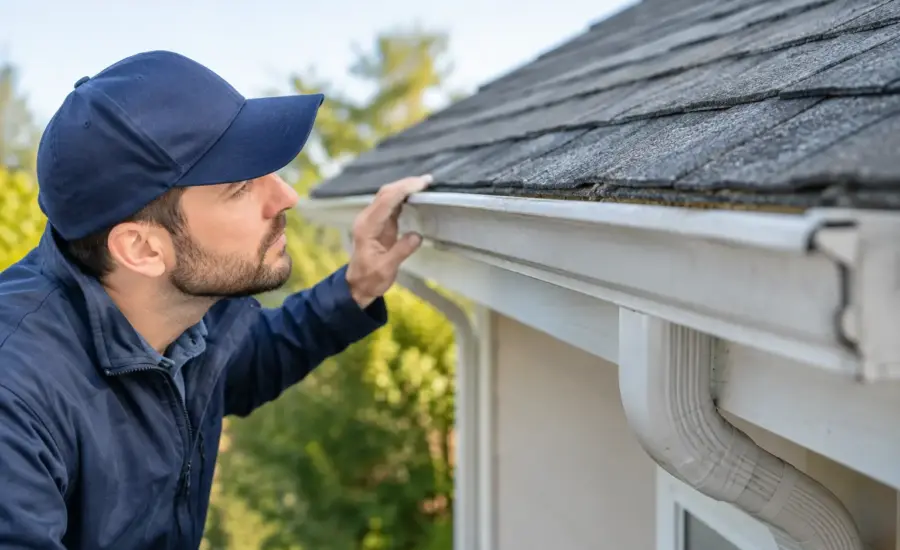
A gutter can look fine from the ground while quietly sending water where it does not belong. That is why homeowners often ask, when should gutters be replaced rather than repaired? The answer comes down to the extent of the damage, the age and material of the system, and whether water is still being directed safely away from the house.
A loose bracket or clogged downspout usually calls for a repair. Repeated leaks, rusted sections, sagging runs, and water damage around the home point to a larger problem. Replacing failing gutters before heavy rain exposes the issue can help protect your roofline, siding, landscaping, and foundation.
When Should Gutters Be Replaced Instead of Repaired?
Gutters are built to collect roof runoff and carry it through downspouts away from the structure. If they cannot maintain the right slope, stay securely attached, or hold water without leaking, repairs may become a short-term patch rather than a lasting solution.
Replacement is often the better choice when the same issue returns after repairs. For example, sealing one leaking seam can make sense. Sealing multiple seams every season, especially on an older sectional gutter system, can cost more over time than installing new gutters.
Age matters, but condition matters more. Aluminum gutters commonly last around 20 years with reasonable maintenance, while galvanized steel may rust sooner in wet climates. Copper can last much longer, but it still needs professional attention if joints fail or the mounting system loosens. Local weather, tree cover, roof design, and maintenance habits can shorten or extend the useful life of any material.
Clear Signs Your Gutters Are Failing
Some gutter problems are easy to spot during a walk around the property. Others show up as damage on the home itself. Look after a rainstorm if possible, since moving water reveals problems that dry weather can hide.
Cracks, Holes, and Separating Seams
Small cracks can spread as water freezes and thaws. Pinholes from corrosion may start as a minor drip, but they allow water to run down siding or collect near the foundation. If damage is limited to one short section, a contractor may be able to replace that piece. Widespread cracks, holes, or seam failures usually support a full replacement.
Sectional gutters have joints where pieces connect, and those joints are common leak points. Seamless gutters reduce the number of joints along each run, though corners and downspout connections still need to be installed correctly.
Sagging, Pulling Away, or Standing Water
Gutters should follow a subtle slope toward the downspout. Sagging sections collect standing water, adding weight and making the sag worse. Gutters that pull away from the fascia may have failed fasteners, rotted fascia boards, or a system that has been overloaded by debris and water.
A contractor can sometimes rehang a sound gutter system with new hangers. But if the metal is bent, the channels are misshapen, or the fascia needs substantial repair, replacing the gutters during the repair is usually more practical.
Rust, Peeling Paint, or Orange Stains
Visible rust is a clear warning on steel gutters, but orange or brown staining can also point to a problem with fasteners, roof runoff, or deteriorating metal. Peeling exterior paint near the gutter line may mean water has been spilling over or leaking behind the system.
Do not assume paint will solve a rust problem. Once corrosion has weakened the gutter, coating it may only hide damage for a short time. A qualified gutter or roofing professional can tell whether the metal is still structurally sound.
Water Damage Around the Home
Watermarks beneath gutters, mildew on siding, eroded soil, and pooling water near the foundation are signs that runoff is not being controlled. You may also notice basement moisture, cracked walkways, or landscaping washed away near downspout exits.
These symptoms do not always mean every gutter must be replaced. A blocked downspout, missing extension, or poor yard drainage can produce similar results. Still, if the gutter system is leaking, overflowing, or improperly sloped, correcting it promptly can prevent much more expensive work later.
Repair or Replace: How to Make the Call
Start with the scope of the issue. A single loose downspout, one damaged elbow, or debris buildup is generally repairable. Replacement becomes more reasonable when there are multiple damaged areas or when repairs have become routine.
Consider these four questions before scheduling work:
- Are leaks or overflow occurring in more than one area?
- Do the gutters sag, bend, or pull away after being resecured?
- Is there rust, cracking, or visible deterioration across long sections?
- Has water already damaged fascia, siding, the foundation area, or landscaping?
If the answer is yes to several of these questions, ask a local contractor for a replacement estimate along with a repair estimate. Comparing both options helps you avoid choosing the lowest immediate price if it only delays another service call.
It also helps to consider the roof’s condition. If you expect a roof replacement in the near future, coordinate the projects. Depending on the roofing method and the gutter condition, it may be more efficient to replace or reinstall gutters as part of that work. Your contractor should explain whether the existing system can remain in place without compromising the roof installation.
Choosing Replacement Gutters That Fit Your Property
New gutters should be sized and placed for the roof, not selected on appearance alone. A large or steep roof sheds water quickly, and homes in areas with frequent intense storms may need wider channels, additional downspouts, or larger downspout outlets. An undersized system can overflow even when it is brand new.
Aluminum is a common choice because it is lightweight, rust-resistant, and available in many colors. Vinyl can be affordable but may become brittle in severe cold or warp in high heat. Steel is strong but needs protection from rust. Copper offers a distinctive look and long service life, usually at a higher price point.
Seamless aluminum gutters are often a practical middle ground for homeowners because they limit long-run seams and can be formed to fit the house. They are not maintenance-free, however. Leaves, shingle grit, and nesting debris can still clog them. Gutter guards can reduce cleanup for some properties, but they are not a universal fix. Fine debris can still accumulate, and guard designs perform differently depending on nearby trees and roof pitch.
Downspouts deserve equal attention. Water should discharge well away from the foundation, where the grade allows it to keep moving away from the building. Extensions, splash blocks, or underground drainage may be appropriate, but the right approach depends on the property layout and local drainage conditions.
Get an Estimate Before Damage Spreads
Ask for a detailed inspection when you notice leaks, sagging, overflow, or staining. A reliable local provider should assess the gutters, hangers, fascia, downspouts, and drainage path rather than quoting a replacement from a quick glance. Request clear details on material, gutter size, downspout placement, removal of old materials, fascia repairs, and workmanship coverage.
For property managers, inspect gutters on a set schedule and after major storms. For homeowners, checking them in spring and fall is a sensible baseline, especially if mature trees are nearby. Catching a clogged downspout or loose hanger early is far simpler than repairing hidden water damage later.
When you are ready to compare nearby gutter, roofing, or exterior repair providers, a local business directory such as Bizbook Directory can help narrow the search by service category and area. Choose a provider that answers questions clearly and explains whether repair or replacement is the better fit for your property.
A gutter replacement is not always urgent, but water damage has a way of becoming urgent when it is ignored. Address warning signs while the solution is still a straightforward exterior repair, not a foundation, siding, or roofline project.