A refrigerator full of groceries, a sump pump during heavy rain, a home office, and a medical device do not all have the same backup-power needs. That is why an emergency generator buying guide should start with your actual priorities, not the largest unit on the shelf. The right generator keeps essential systems running safely without paying for more capacity, fuel, or installation work than your property requires.
For homeowners, landlords, and property managers, the buying decision usually comes down to three questions: What must stay on during an outage? How long do you need power? And who will install or connect the equipment safely? Answer those first, then compare generator types, fuel choices, and local service providers.
Start With the Loads You Cannot Lose
A generator is not meant to run every outlet and appliance unless you are investing in a properly sized whole-home system. Begin by separating essential loads from conveniences. During a short outage, many homes only need refrigeration, a few lights, internet equipment, phone charging, a furnace blower or boiler controls, and possibly a sump pump.
Longer outages change the calculation. If your property relies on a well pump, electric heat, a septic pump, security systems, or temperature-sensitive medications, those loads may belong on the essential list. Property managers may also need to account for common-area lighting, gate controls, elevator limitations, fire-safety requirements, and tenant communications.
Look for both running watts and starting watts. Motors in refrigerators, pumps, air conditioners, and power tools can draw significantly more power when they start than when they run. A generator that appears large enough on paper may overload when a pump and refrigerator compressor turn on at the same time.
If you are unsure which circuits and appliances should be backed up, ask a licensed electrician to perform a load calculation. It is a practical step that can prevent undersizing, unnecessary upgrades, and unsafe connections.
Emergency Generator Buying Guide: Choose the Right Type
The best generator type depends on how often outages happen, how much automation you want, and whether you need to move the unit between locations.
Portable generators
Portable generators are usually the lowest-cost option and can support a limited set of essential loads. They are useful for occasional outages, job sites, and properties where a permanent installation is not practical. Most run on gasoline, though dual-fuel and tri-fuel models may also use propane or natural gas.
Their trade-off is hands-on operation. You need to bring the generator outside, check fuel, start it, manage extension cords or a transfer switch, and secure it from weather and theft. They also require regular maintenance even if they are rarely used.
A portable generator can work well for a homeowner who wants to keep food cold, power a sump pump, and charge devices during a day-long outage. It is less convenient for someone who travels often or cannot safely operate equipment during severe weather.
Inverter generators
Inverter generators are a portable option designed to produce cleaner, more stable power. That matters for laptops, routers, televisions, and other sensitive electronics. They are generally quieter and more fuel-efficient at lower loads than conventional portable units.
The downside is capacity and cost. Smaller inverter models are ideal for a few circuits or devices, but a larger property may require two units connected in parallel or a higher-capacity generator. Compare the rated output, noise level, runtime, and parallel capability rather than assuming every inverter model is suitable for home backup.
Standby generators
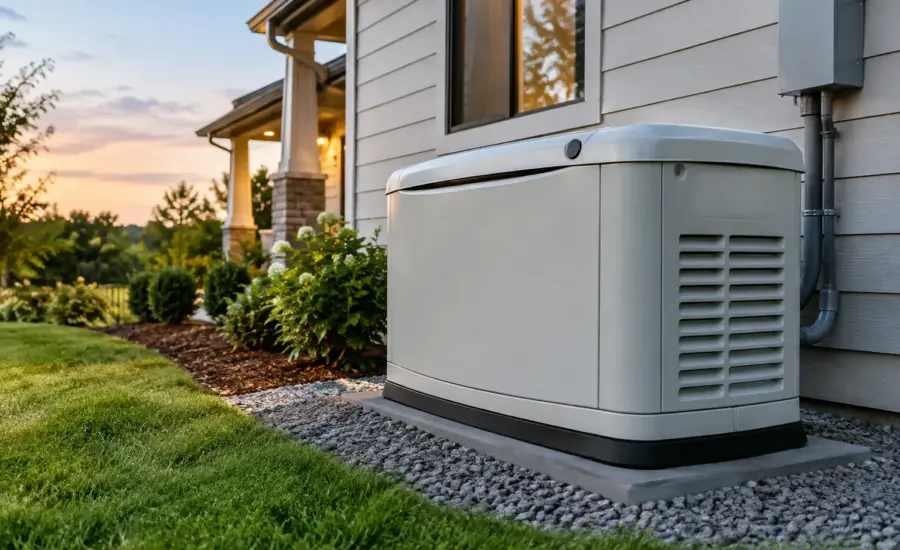
A standby generator is permanently installed outside the home or commercial building and connected through an automatic transfer switch. When utility power fails, the system can start on its own and restore selected circuits or most of the building within seconds or minutes.
This is the most convenient option for frequent outages, medically necessary equipment, vacant properties, and businesses that cannot afford much downtime. It also involves the highest upfront cost because the project may include electrical work, a concrete pad, permits, fuel-line work, and inspection.
Standby systems are often fueled by natural gas or propane. Natural gas removes the need to refuel during an outage, but it depends on local utility availability. Propane gives you an on-site fuel supply, though the tank must be sized for the generator load and expected outage duration.
Match the Fuel to Your Outage Plan
Fuel is not a minor specification. It determines how long you can operate, how much preparation you need, and how useful the generator will be during a regional emergency.
Gasoline is easy to find under normal conditions, but it has a limited storage life and may be difficult to obtain after a storm. If you choose gasoline, use approved containers, rotate stored fuel, and follow local storage rules. Never store it near ignition sources.
Propane stores longer than gasoline and is available in portable cylinders or larger tanks. It is a strong choice for portable dual-fuel units and standby systems, particularly where outages can last several days. A small grill-sized cylinder may not provide the runtime you expect under a heavy load.
Natural gas is convenient for permanent generators because it can supply fuel continuously. However, it is not available everywhere, and severe events can occasionally affect service. Diesel is common for larger commercial backup systems because of its efficiency and durability, but fuel storage, maintenance, and emissions requirements deserve closer attention.
Dual-fuel and tri-fuel generators add flexibility, not unlimited capability. Output can vary by fuel type, so check the manufacturer ratings before deciding that a model meets your load requirements.
Do Not Skip the Transfer Switch
A transfer switch is the safest way to connect a generator to selected home circuits or a building electrical panel. It prevents generator power from feeding back into utility lines, a dangerous condition that can injure utility workers, damage equipment, and create fire hazards.
Do not use a generator through a makeshift connection, such as plugging it into a dryer outlet. That practice is unsafe and may violate electrical codes. Extension cords can be acceptable for a few temporary loads, but use outdoor-rated cords sized for the equipment and keep them out of standing water and traffic paths.
An electrician can install a manual transfer switch for a portable generator or an automatic transfer switch for a standby system. They can also identify which circuits should be included, confirm grounding requirements, and help coordinate permits where needed. For larger installations, a qualified generator installer may work alongside an electrician and fuel supplier.
Plan for Placement, Noise, and Maintenance
Portable generators must run outdoors, far from doors, windows, vents, garages, crawlspace openings, and neighboring structures. Carbon monoxide is colorless and odorless, and it can enter a building quickly. Install working carbon monoxide alarms on every level of the home and near sleeping areas.
Standby generators also need proper clearance from structures, windows, utility equipment, and property lines. Local rules, manufacturer requirements, and HOA restrictions can affect placement. Noise matters too, especially in close neighborhoods or multi-unit properties. Compare decibel ratings, but remember that real-world sound changes with distance, walls, landscaping, and load level.
Every generator needs exercise and maintenance. Start portable units on a schedule, inspect oil and air filters, test the battery or electric starter, and replace stale fuel. Standby systems often run automatic weekly tests, but they still need professional service, battery checks, and fuel-system inspections.
Compare Local Providers Before You Commit
Generator projects can involve electrical, fuel, concrete, excavation, and permitting work. The lowest equipment price does not always produce the best installed system. When comparing local providers, ask whether they handle load calculations, permits, transfer-switch installation, startup testing, warranty registration, and future maintenance.
For portable-generator connections, look for a licensed electrician familiar with interlock kits and transfer switches. For standby systems, confirm that the contractor has experience with the brand and fuel type you are considering. Request a clear written scope that separates equipment, labor, site preparation, permits, and any optional maintenance plan.
A local business directory such as Bizbook Directory can help narrow your search by service category and area, making it easier to find electricians and generator installers who serve your property location. Check licensing, insurance, customer feedback, and response expectations before scheduling the work.
The best generator is the one that supports the loads you truly need, uses fuel you can manage, and connects through a safe, code-conscious installation. Make the plan before the next outage, when you still have time to compare providers, ask good questions, and choose power backup that fits your property.