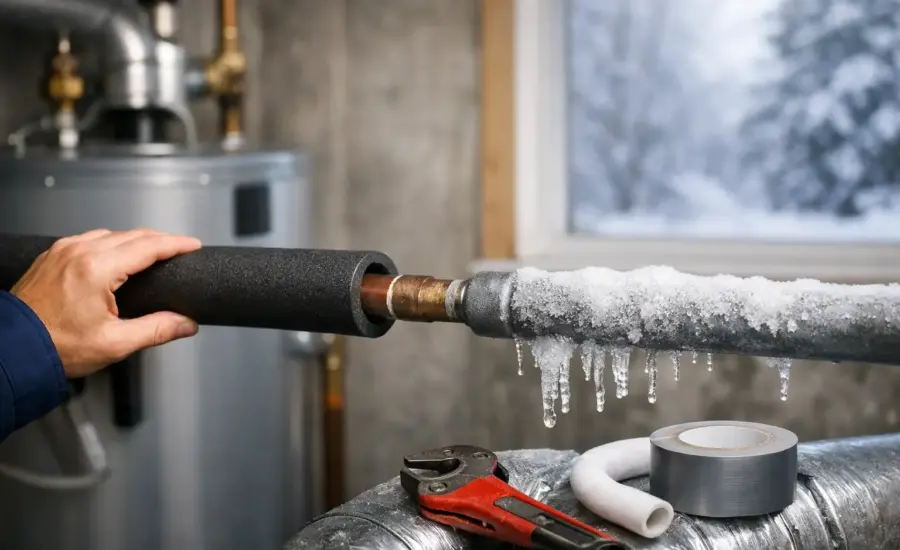
A pipe can freeze long before the rest of the house feels cold. The usual trouble spots are tucked behind an exterior wall, under a sink, in a crawl space, or along an unheated garage. Knowing how to prevent frozen pipes is less about one dramatic fix and more about protecting those vulnerable areas before a hard freeze puts pressure on your plumbing system.
A burst pipe can release a surprising amount of water in minutes. For homeowners, landlords, and property managers, a little preparation is usually far less disruptive than emergency drying, repairs, and tenant or family displacement.
Why pipes freeze in the first place
Water expands as it freezes. When ice forms inside a pipe, it can block the flow of water and create pressure between the ice blockage and a closed faucet. That pressure, not the ice itself, is what can split a pipe or force apart a fitting.
Pipes near exterior walls are especially exposed, but location is not the only factor. Poor insulation, air leaks, a closed interior door that cuts off warm airflow, and a thermostat set too low can all create a freezing risk. Older homes may have plumbing routed through uninsulated crawl spaces or cabinets with little protection from outside temperatures.
The goal is simple: keep pipes warm enough, keep cold air away from them, and make sure water has a path to move when temperatures drop.
How to prevent frozen pipes before a cold snap
Start before the forecast calls for severe weather. Winter preparation is easier when you have time to inspect the home, make small repairs, and schedule a local plumber if you find a concern.
Insulate exposed plumbing
Look at pipes in unheated or partially heated areas, including basements, crawl spaces, attics, garages, utility rooms, and exterior-facing cabinets. Foam pipe sleeves are an affordable first layer of protection for accessible pipes. Secure the insulation fully around the pipe, paying close attention to elbows, valves, and joints where gaps are common.
Insulation slows heat loss, but it does not create heat. In a poorly sealed crawl space or an unheated area during prolonged subfreezing temperatures, insulation alone may not be enough. Heat cable or heat tape can be useful for specific exposed runs, provided it is approved for plumbing use and installed according to the manufacturer’s instructions. Avoid improvised heating methods or damaged electrical cords around water lines.
Seal drafts around vulnerable areas
Cold air can reach pipes through openings around dryer vents, plumbing penetrations, basement windows, foundation gaps, and garage doors. Check where pipes enter the home and seal accessible gaps with the appropriate weatherproof material.
This is also a practical energy-saving step. If a sink cabinet feels unusually cold in winter, the issue may be a draft rather than a lack of pipe insulation. Addressing the air leak helps both the plumbing and the room’s comfort.
Keep indoor temperatures steady
Set the thermostat to at least 55 degrees Fahrenheit when the property is occupied or vacant during winter. A lower setting may save a small amount on heating, but it can expose pipes in exterior walls or remote areas of the building to freezing conditions.
Keep the heat on consistently during travel. Do not turn the system off because the home will be empty for a few days. If you manage rental properties, communicate clear winter temperature expectations to tenants and consider periodic checks during extended cold spells.
If one room stays much colder than the rest of the home, investigate it. It may have weak insulation, ductwork problems, a malfunctioning heating source, or an air leak that also affects nearby pipes.
Let warm air reach cabinet pipes
Open cabinet doors beneath kitchen and bathroom sinks when temperatures are expected to fall below freezing, especially if those cabinets sit against an exterior wall. This allows warmer room air to circulate around supply lines and drain pipes.
Remove household chemicals, cleaners, and other hazards from reach if children or pets are present. A partially opened cabinet door can help, but safety still comes first.
Disconnect and drain outdoor connections
Remove garden hoses from outdoor spigots before freezing weather arrives. Leaving a hose connected can trap water inside the faucet and the pipe behind it, causing damage even when the faucet itself is frost-free.
Shut off the interior supply valve to outdoor faucets if your home has one, then open the outdoor spigot to drain remaining water. For irrigation systems, follow the recommended winterization process for your setup. In many areas, that means a professional blowout to clear water from underground lines. Skipping this step can lead to damaged sprinkler components and hidden leaks in spring.
What to do during a hard freeze
When temperatures are headed well below freezing, focus on the areas most likely to fail. Keep the thermostat steady day and night. Rapidly lowering the temperature overnight is not worth the risk during extreme cold.
Letting a faucet drip can help in certain situations, particularly on a vulnerable line served by an exterior wall. A small, steady trickle of both hot and cold water keeps water moving and can relieve pressure if ice begins to form. It is not necessary to run every faucet in the house. Target fixtures with a history of freezing or pipes located in cold areas.
For properties with a crawl space, basement, or garage plumbing, check that access doors and vents are positioned appropriately for winter conditions. The right approach depends on the home’s design and local building practices. Do not block required ventilation without professional guidance, especially where gas appliances are present.
Recognize a frozen pipe early
A faucet that produces only a trickle, no water at all, or noticeably reduced pressure during a cold spell may indicate a frozen pipe. Frost on a visible pipe, unusual odors from a drain, or damp spots on a wall or ceiling also deserve attention.
If you suspect a pipe is frozen, open the affected faucet. Then warm the pipe gradually using safe, controlled heat, such as a hair dryer on a low setting or warm towels. Begin near the faucet and work toward the suspected frozen section so melting water has somewhere to escape.
Never use an open flame, propane torch, charcoal grill, or high-heat device to thaw plumbing. These methods can damage pipes, ignite nearby materials, or create carbon monoxide hazards. If you cannot identify the frozen section, if the pipe is behind a wall, or if it is already bulging or leaking, call a qualified plumber rather than taking the risk.
Know where your main water shutoff is
Every household and managed property should have a clearly identified main water shutoff valve. It is often located near the water meter, where the water line enters the building, or in a utility area. Ask all responsible adults, maintenance staff, or tenants where it is and make sure the valve can still be turned.
If a pipe bursts, shut off the main water supply immediately, turn off electricity to affected areas only if it is safe to do so, and contact a plumber. Move valuables away from the leak and document visible damage for insurance purposes. Do not ignore a small leak. Water can travel inside walls and under flooring long after the visible drip stops.
When professional help makes sense
Some homes have recurring frozen-pipe problems because the underlying issue is structural. A plumber can identify poorly routed water lines, uninsulated sections, aging pipes, failing shutoff valves, or pressure concerns. An HVAC professional may be the right call when inadequate heating or cold rooms are part of the problem.
For homeowners and property managers, finding a nearby provider with the right service category can shorten the time between noticing a problem and getting help. Bizbook Directory helps users look for local plumbing and HVAC businesses based on location, making it easier to compare relevant services without sorting through distant results.
The best time to locate a plumbing professional is before the next freeze. Keep the main shutoff accessible, protect the pipes you can see, and address the cold areas you have learned to work around. Those small preparations give your home a much better chance of staying dry when the temperature drops.