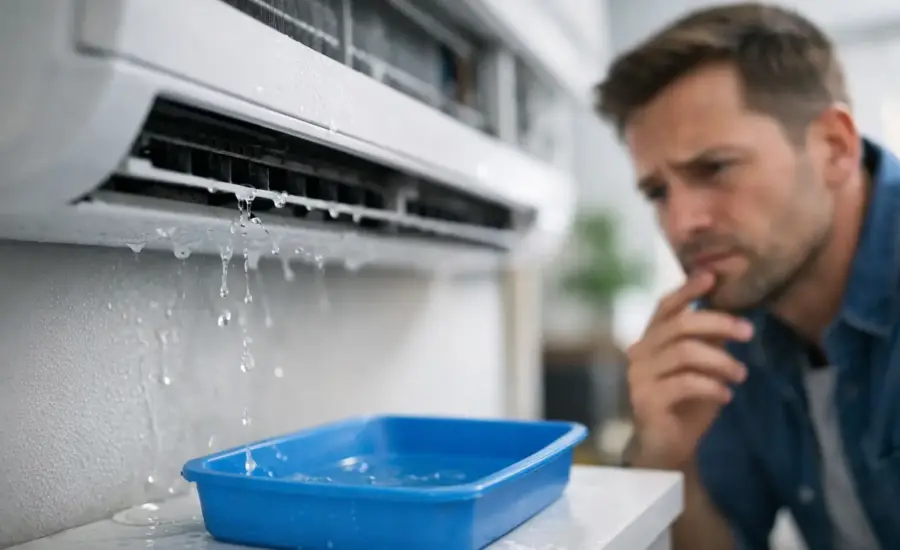
A puddle near an indoor air handler can turn a normal summer afternoon into a property-damage problem quickly. Understanding why AC units leak helps homeowners and property managers decide whether they can safely handle a simple maintenance task or need a local HVAC professional before water reaches drywall, flooring, wiring, or ceilings below.
First, identify what is leaking. Clear water near the indoor portion of a central AC system is usually condensation that is not draining correctly. Oily liquid, a sharp chemical smell, weak cooling, or ice on the refrigerant line may point to a refrigerant issue instead. Those situations need professional service.
Why AC Units Leak Water Indoors
Your air conditioner does more than cool the air. As warm, humid air passes over the cold evaporator coil, moisture in that air condenses into water. In normal operation, the water collects in a drain pan and flows through a condensate drain line to the outside or to a plumbing drain.
A leak happens when that path is blocked, damaged, or overwhelmed. The most common causes are manageable, but waiting can make a small drainage issue expensive.
A clogged condensate drain line
This is one of the most frequent reasons for an AC water leak. Algae, mold, dust, and other buildup can collect inside the narrow drain line. Once the line clogs, water backs up into the pan and eventually spills over.
You may notice water around the air handler, a musty smell, or a system that shuts off unexpectedly. Many newer systems have a float switch designed to stop the unit when the drain backs up, but not every system has one and switches can fail.
If you can safely access the drain line’s outdoor termination, check for visible blockage. Do not force tools or chemicals into the line if you are unsure where it runs. A technician can clear the drain, inspect the trap and vent, and confirm that water is flowing where it should.
A dirty air filter or frozen evaporator coil
Restricted airflow can cause the evaporator coil to get too cold and freeze. A clogged filter is a common trigger, although a blower problem, blocked return vent, or low refrigerant charge can produce the same result.
When the ice melts, it can create more water than the drain pan can handle. That is why a unit may appear to leak long after it has been running. If you see ice on the coil area or refrigerant line, turn the cooling mode off, set the fan to On if your system allows it, and let the system thaw. Replace a visibly dirty filter, but do not restart cooling until the underlying cause is checked if the coil freezes again.
A cracked, rusted, or misaligned drain pan
The primary drain pan sits under the evaporator coil. Over time, older metal pans can rust, plastic pans can crack, and a pan can shift out of position during prior work. Water then drips directly from the unit rather than entering the drain line.
This repair is not always as simple as replacing a tray. In many systems, the pan is difficult to reach because it sits inside the coil cabinet. An HVAC contractor can determine whether the pan can be repaired or whether a component needs replacement.
A disconnected or poorly installed drain line
A drain line connection can loosen after vibration, renovation work, or an installation issue. Improper slope, missing drain traps, or incorrect venting can also keep condensate from moving properly. These problems are especially common when a system has been replaced or altered without checking the existing drainage setup.
If water appears only when the AC runs and the leak is near a pipe connection, avoid using the system until the connection is inspected. Repeated leaking can damage the unit’s base, insulation, and nearby building materials.
High humidity and an undersized drainage setup
During very humid weather, an AC system removes a surprising amount of moisture. A properly designed drain should still manage that water, but existing issues become more obvious during heat waves, after storms, or when a system runs for long periods.
Humidity alone is rarely the full explanation for water inside the home. It usually exposes a partial clog, inadequate slope, dirty coil, or drain arrangement that needs attention.
When an AC Leak May Be Refrigerant
People often use the word “leak” to describe water and refrigerant, but the response should be very different. Refrigerant does not normally form a puddle of clear water. It may leave oily residue around line connections or coil components, and it often comes with reduced cooling, longer run times, hissing sounds, or frozen lines.
Refrigerant work requires trained, properly equipped HVAC professionals. Do not try to add refrigerant from a store-bought kit or seal a suspected line leak yourself. Simply adding refrigerant without finding the leak can provide short-term cooling while allowing the underlying problem to continue.
An experienced technician should locate the leak, explain the repair options, and help you weigh the age and condition of the system against the cost of the repair. On an older unit with multiple issues, replacement may be worth considering. On a newer unit with an accessible leak, a targeted repair may make more sense.
What to Do When You Find Water Near Your AC
Act early, but keep the response simple. Water around HVAC equipment can create electrical and structural risks.
- Turn the thermostat from Cool to Off if water is actively leaking or approaching electrical components.
- Place towels or a shallow container under the drip if it is safe to do so, then move nearby belongings away from the area.
- Check the air filter and replace it if it is heavily soiled or overdue for replacement.
- Look for ice, a full secondary drain pan, or obvious water damage, but do not remove sealed panels or touch exposed wiring.
- Call an HVAC professional promptly if the leak continues, the system freezes, the ceiling is wet, or you suspect refrigerant.
For property managers, document the location of the leak and any affected rooms before service arrives. That information helps determine whether the problem is limited to the equipment or has reached insulation, ceilings, or flooring. If water is coming through a ceiling, treat it as urgent and avoid standing beneath a sagging area.
How to Prevent AC Drain Problems
The most useful prevention is regular, basic upkeep. Replace filters on the schedule recommended for your household and system. Homes with pets, active renovation work, or heavy seasonal use may need more frequent changes. Keep supply and return vents open and clear so air can move through the system as designed.
A seasonal HVAC maintenance visit can catch drain buildup, coil contamination, loose connections, and poor airflow before they become leaks. Ask the technician to inspect the condensate drain, pan, safety float switch, and refrigerant line insulation. If your air handler is in an attic, closet, or other finished area, these checks are particularly valuable because the consequences of an overflow are higher.
It also helps to know where your unit drains. A small outdoor PVC pipe may drip water while the AC runs, and that is often normal. No water at the outlet on a humid day, combined with water indoors, can be a useful clue that the drain line is blocked.
Finding the Right Local HVAC Help
A water leak does not always require an emergency call, but it should not be ignored. Look for an HVAC provider that can diagnose drainage, airflow, coil, and refrigerant concerns rather than treating every leak as a quick drain-line cleaning. Ask what they found, what repair they recommend, and whether there are signs of related water damage.
Bizbook Directory can help homeowners and property managers find nearby HVAC businesses by service category and location. Choosing a local provider makes it easier to schedule a visit, get clear next steps, and arrange follow-up maintenance if needed.
A dry floor after the drip stops is not always proof that the problem is solved. Watch the system through its next cooling cycle, check the surrounding area again, and address any repeat moisture before it has time to become a bigger repair.