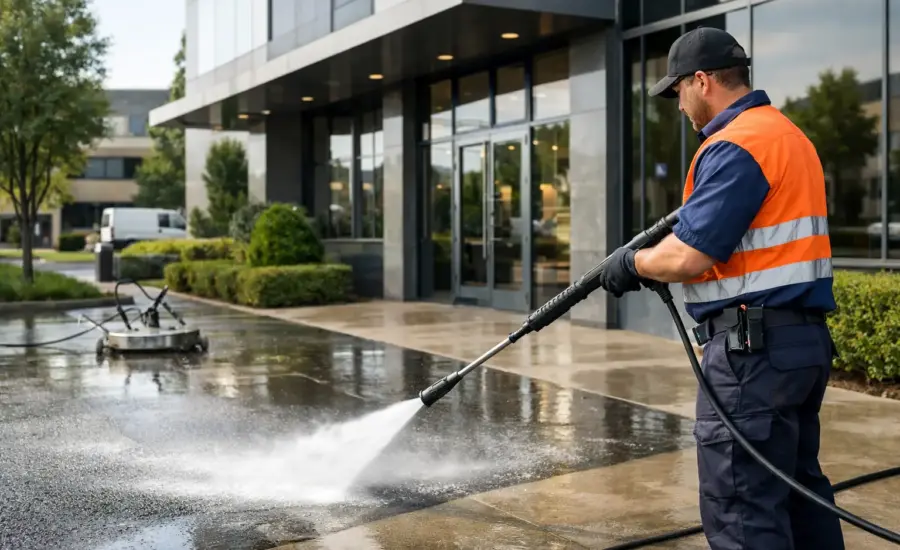
A stained storefront sidewalk, slick dumpster pad, or algae-covered entryway can change how customers view a business before they walk through the door. Pressure washing for commercial properties is not just about looking clean. Done correctly, it helps property managers reduce slip risks, protect exterior materials, and keep high-traffic areas ready for tenants, visitors, and employees.
The right approach depends on the property, the surface, the source of the buildup, and the local rules around runoff. A restaurant patio does not have the same needs as a medical office entrance, warehouse loading dock, or retail center parking area. The goal is a practical maintenance plan, not a one-size-fits-all cleaning job.
What Commercial Pressure Washing Can Address
Commercial exteriors collect more than ordinary dust. Foot traffic leaves gum and drink stains. Landscaping creates pollen, dirt, leaves, and organic debris. Parking areas pick up oil spots, tire marks, and exhaust residue. In humid or shaded areas, mold, mildew, and algae can make concrete and walkways slippery.
Pressure washing is commonly used on sidewalks, entry pads, storefronts, exterior walls, parking garages, loading areas, drive-thrus, dumpster enclosures, patios, fences, and common areas. It can also help prepare surfaces for painting, sealing, or repair work by removing loose dirt and residue first.
Not every surface should receive the same pressure level. Concrete can generally tolerate more force than painted siding, awnings, wood, older brick, stucco, or delicate stone. A qualified provider adjusts water pressure, nozzle selection, cleaning solution, and technique to the material at hand. For some surfaces, soft washing is the better option because it relies more on appropriate cleaning agents and lower pressure.
Why Appearance Is Only Part of the Job
A clean commercial property makes a stronger first impression, particularly for businesses that depend on walk-in traffic. Retail shops, restaurants, apartment communities, offices, clinics, and hospitality properties all benefit when entrances and shared spaces look cared for.
But appearance is only one reason to schedule service. Organic growth on walkways can create a traction problem, especially after rain. Grease around a kitchen entrance or dumpster area can attract pests and create unpleasant odors. Built-up debris in loading zones and drainage areas can interfere with routine operations.
Regular cleaning can also extend the useful life of exterior surfaces. Dirt and pollutants can wear down protective coatings over time, while mold and algae may hold moisture against certain materials. Pressure washing will not repair cracks, failing paint, or damaged concrete, but it can make those issues easier to spot before they become larger maintenance projects.
How Often Should a Property Be Cleaned?
There is no universal schedule for commercial pressure washing. High-traffic businesses may need attention every month or quarter, while lower-traffic offices may only need seasonal service. The best schedule is based on what customers and staff encounter every day.
Restaurants, grocery stores, gas stations, healthcare facilities, and busy retail locations often need more frequent cleaning around entrances, sidewalks, carts, patios, and service areas. Multi-tenant properties may schedule quarterly cleaning for common walkways and annual deep cleaning for parking areas, building exteriors, and dumpster pads.
Location matters, too. Properties near construction activity, heavily traveled roads, trees, coastal conditions, or long humid seasons tend to collect grime faster. A shaded north-facing walkway may develop algae even when the rest of the building looks clean.
Instead of booking service only when the property looks neglected, create a simple inspection routine. After storms, busy seasons, landscaping work, or special events, walk the exterior and look for stains, slippery spots, gum, drainage issues, and buildup near entrances. That gives managers a clearer basis for scheduling work and budgeting for it.
Planning Pressure Washing for Commercial Properties
Before requesting quotes, identify the areas that need cleaning and the outcome you need. A provider can give a more useful estimate when they know whether the job involves sidewalks only, a full building wash, grease removal, parking surfaces, or recurring maintenance.
It also helps to plan around the business schedule. Cleaning a main entrance during peak customer hours can disrupt operations and create wet-surface hazards. Many commercial providers offer early morning, evening, or weekend service for this reason. For retail centers and office properties, work may need to be coordinated with multiple tenants, deliveries, security, or maintenance teams.
Ask how the provider will manage water, cleaning products, and runoff. Wastewater from grease, oil, chemicals, or heavy soil may require collection or special handling instead of flowing into storm drains. Requirements vary by municipality and property type, so a contractor should understand the applicable local expectations before beginning work.
For larger properties, break the scope into zones. Prioritize public entrances and safety-sensitive areas first, then schedule lower-visibility spaces such as loading bays, rear walkways, and enclosure areas. This can make recurring service more manageable without ignoring the places that affect operations.
What to Look for in a Commercial Provider
Price matters, but the lowest quote can create problems if it leaves out surface protection, wastewater handling, insurance, or after-hours coordination. Commercial work requires more planning than washing a residential driveway.
Look for a provider that can explain their process in plain language. They should ask about the surface type, stains, access points, water availability, operating hours, and any areas that need special care. Clear questions are usually a sign that the contractor is planning for the actual property rather than offering a generic price.
A dependable provider should carry appropriate business insurance and be prepared to share documentation when requested. They should also use commercial-grade equipment suited to the job and know when lower-pressure methods are safer. If a company promises that maximum pressure is the answer for every stain, that is a reason to ask more questions.
For recurring work, request a written scope that identifies the service areas, frequency, timing, expected results, and exclusions. Some stains, such as deep oil penetration, rust, paint, or permanent discoloration, may require specialty treatment or may not come out completely. Setting expectations before the work starts avoids confusion later.
If you are comparing local providers, use a category-specific directory such as Bizbook Directory to narrow the search by service and location. Then contact a few qualified businesses with the same scope of work so the estimates are easier to compare.
Protecting the Property During Service
Property managers can make the work safer and more efficient with a little preparation. Move portable furniture, signs, carts, and outdoor displays away from the cleaning area. Let tenants or staff know when access may be limited, and make sure vehicles are moved from parking or loading areas that will be washed.
Sensitive items need attention as well. Exterior electrical outlets, door thresholds, landscaping, windows, cameras, and HVAC equipment may need to be protected or avoided. Good contractors will handle much of this planning, but site-specific knowledge from the manager helps prevent surprises.
After cleaning, allow surfaces to dry before reopening them to normal foot traffic. This matters most at entrances, ramps, stairways, and smooth concrete areas. Proper signage and temporary barriers can reduce the chance of a slip while the area is still wet.
Avoiding Common Maintenance Mistakes
Waiting until grime becomes severe often makes cleaning more expensive and less predictable. Heavy buildup may need multiple treatments, and neglected areas can hide damage that requires separate repairs. A consistent schedule is usually easier to manage than emergency cleaning before an inspection, tenant tour, or event.
Another mistake is treating every stain as a pressure problem. High pressure can damage mortar, force water behind siding, strip paint, etch softer surfaces, and harm landscaping if used carelessly. The right cleaning method starts with identifying the stain and the surface, not simply turning up the equipment.
Finally, do not overlook the back-of-house areas. Customers may not see them, but employees, vendors, inspectors, and tenants do. Clean loading zones, service corridors, and dumpster enclosures support safer daily operations and show that the property is being maintained beyond its front entrance.
A well-kept exterior tells people that details are handled. Start with the areas where people walk, work, and form their first impression, then build a cleaning schedule that fits the property rather than reacting after the buildup becomes impossible to ignore.